
From the Ground Up: Inside Mohave Electric Cooperative’s Apprenticeship Program
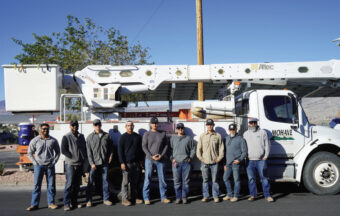
For many employees at Mohave Electric Cooperative (MEC), a career in the electric utility industry wasn’t something they planned years in advance—it was an opportunity that presented itself and quickly turned into a calling. Some were pursuing paths in nursing and other medical fields, while another came from a background as a crane operator, each bringing unique experiences to MEC.
In a recent interview, several apprentices and journeymen from both linemen and substation departments shared their experiences, offering insight into what it’s really like to build a career at MEC—from starting as a groundman to working toward journeyman status.
Finding the Path
For some, the introduction to Mohave Electric was as simple as asking a question at home.
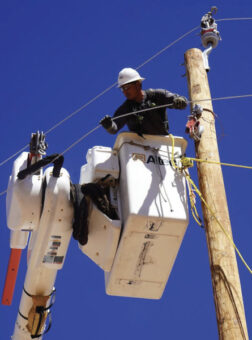
Grant Kawell, an apprentice lineman, shared he had been around outdoor work from an early age, as his father worked as a crane operator in mountainous terrain— an experience that sparked an interest in hands-on work. While he found that type of work interesting, Grant wanted more and ultimately set his sights on a career in the electric utility field. Shortly after high school, Grant completed lineman college courses in Southern California, taking the first steps toward turning that goal into reality.
That path soon led him to Mohave Electric Cooperative. “My parents had a second home out here and I’ve been coming out this way since I could remember,” Grant recalled. “I asked my parents who they paid their electric bill to; they said Mohave Electric. I applied, then emailed everyone I could find at MEC, interviewed for the job, and next thing I knew, I got the job.”
That persistence paid off. Grant applied to Mohave Electric Cooperative with little to no prior experience in the electric utility field. From there, opportunities to advance came quickly. Within six months of being hired as a groundman at MEC, Grant began the apprenticeship program—an opportunity made available to those willing to put in the work.
Learning on the Job
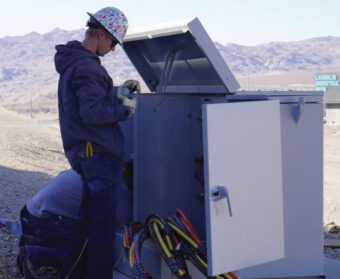
MEC’s apprenticeship program is a commitment that spans about four years of roughly 8,000 hours of on-thejob training. In addition to time spent in the field, apprentices dedicate many hours at home to coursework and study. Their progress depends on completion of required coursework, testing, and overall performance—an investment that reflects the discipline and determination needed to succeed in the trade.
“Mohave Electric wants you to keep a steady pace,” first-year apprentice lineman Josh Eble explained. “That way you don’t fall behind on your books or tests.”
While all classroom-style studying is completed on personal time at home, apprentices apply what they learn directly in the field. Coursework includes electrical theory and math, while hands-on training covers underground and overhead systems, transmission work, and substation operations.
“There’s a lot more math involved than people expect,” said Josh. “It starts off pretty basic—fractions and simple math—but it builds. You’re also learning about electrical properties, so it definitely makes you think.”
Although lineman colleges are not required by MEC, some individuals interested in entering the electric utility field may choose to attend a 15-week program independently, prior to being hired at any electric utility, to gain familiarity with climbing, equipment, and safety practices.
Challenges & Rewards
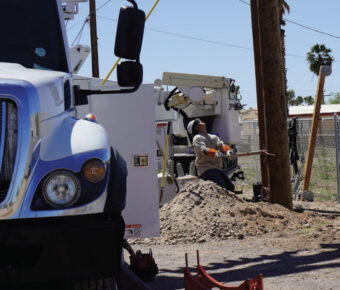
The work is demanding—both physically and mentally.
“Wake-ups at 2:00 or 3:00 in the morning are tough,” one apprentice shared. “Especially when you’re responding to outages.”
Despite the long hours and challenging conditions, apprentices say the most rewarding part of the job is seeing how academic knowledge translates into real-world application.
“When something finally clicks and you understand why you’re doing the task in the field, it makes it worth it,” Josh said.
Safety & Brotherhood
1 theme echoed by every apprentice and lineman was safety—and the culture of watching out for one another.
“This job is more dangerous than people realize,” Grant explained. “One mistake can put you in a bad situation fast, so you have to stay alert all the time.”
That awareness creates a strong sense of brotherhood among crews.
“If you see something that doesn’t look right, you say something—whether you’re right or wrong,” Grant said. “It makes everyone stop and think.”
The connection extends beyond the job site. Apprentices and journeymen work side by side every day, often spending more time together than with their own families.
“We look out for each other on a personal level too,” Omar Becerra, journeyman substation, shared. “If someone’s struggling, we all step up to help get them through it.”
A Day in the Life
A typical day starts early—very early. “You show up, stock trucks, prep materials, work in the field, clean up, and do it all again the next day,” Grant joked. “And hope there are no outages.”
It’s hard work, but it’s steady, meaningful, and essential to the community MEC serves.
Advice for the Next Generation
When asked what advice they would give their younger selves, the message was clear: start your career early, be prepared to work hard, and stay committed.
“Work ethic and common sense go a long way,” Omar said. “You don’t need to know everything—just be willing to learn.”
For those considering a trade career, MEC’s apprenticeship program offers a clear path forward—one built from the ground up, powered by teamwork, and rooted in service.